
It has been nearly 78 years since India gained independence, yet the country continues to witness various communities voicing distinct and often conflicting demands. The farming community seeks subsidies over corporate interests. The Seven Sisters region pushes for greater inclusion in mainstream society. South India resists the imposition of Hindi. The list is long, and the grievances are real. Let me draw attention to a particularly striking contrast in the demands made by two communities: Dalit and Savarna. Acknowledging this contrast may seem uncomfortable given the historical marginalisation of one community, but it would be intellectually dishonest to ignore the fact that both communities hold fundamentally different visions of social reform.
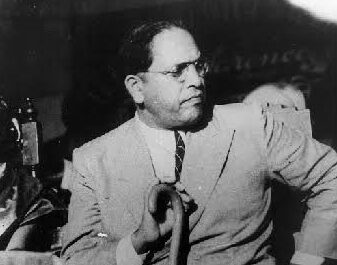
Dr. B.R. Ambedkar argued this point on multiple occasions. His landmark work, Annihilation of Caste, remains one of the most powerful articulations of why the caste system must be dismantled altogether. This, arguably, is the very reason he attracted such intense hostility anyone who attempts social reform, directly or indirectly, inevitably challenges the old customs and power structures of society. The same fate met Jyotirao Phule and Savitribai Phule, who were treated as criminals simply for educating girls and women. To be clear, this article is not an advocacy piece for Dalit rights and reservations alone — it is an attempt to examine a deeper structural contradiction.
The Dalit community asks, at its core, for equality and representation not as a favour, but as an inseparable element of a functioning democratic society. Reservation, in this context, is not a privilege; it is a mechanism of corrective representation for a community that has been systematically excluded for centuries.
On the other side, the so-called Savarna community, roughly 20% of the population, has historically sat above the marginalised, exercising control over social, religious, and economic structures. Their demands tend to revolve around preserving temple rights, maintaining the Varna and caste hierarchy, and, ironically, criticising Dalits for availing reservations. The pattern is consistent and revealing.
The question that demands an honest answer is this: why does this 20% rarely raise the question of equality unless reservation is the topic at hand? Why does the conversation about social justice only begin when their own privileges feel threatened? These are questions worth sitting with, and ones I intend to unpack further, with facts, in the articles ahead. Stay tuned.